
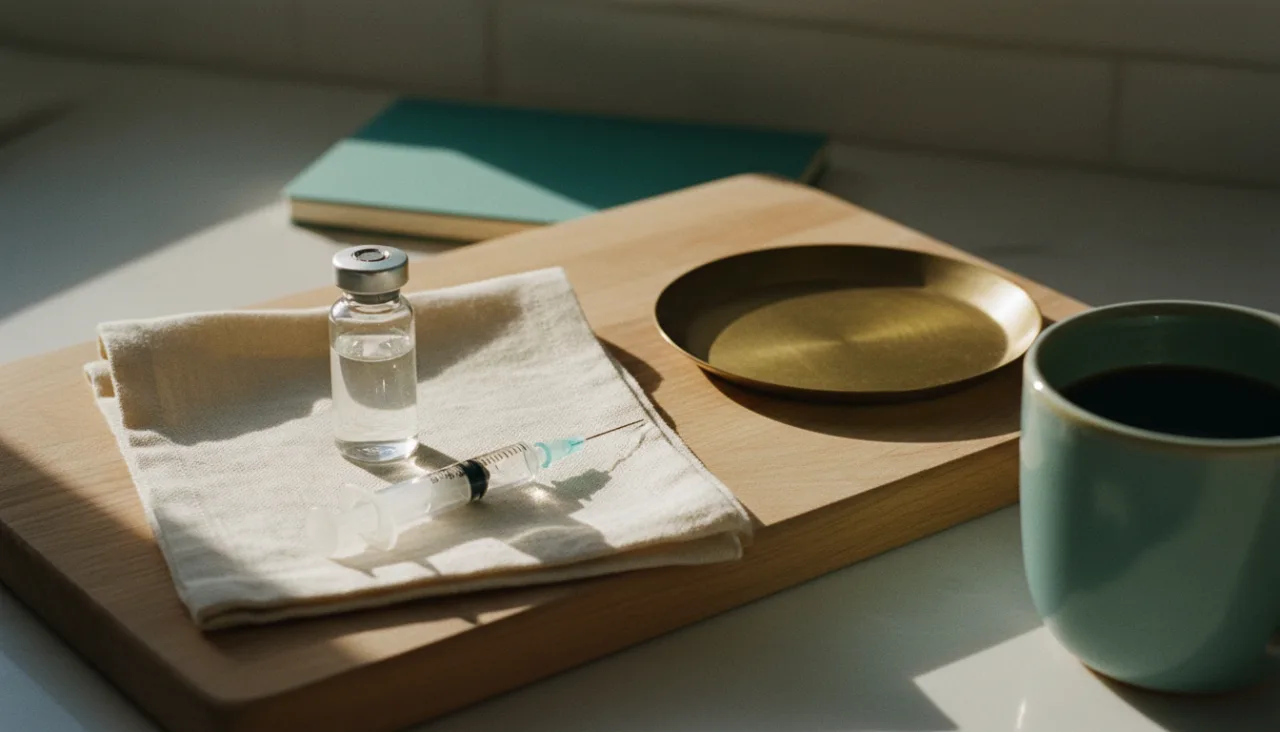
Bacteriostatic water vs sterile water: how to reconstitute peptides
The short version: both are injection-quality water. Bacteriostatic has a preservative; sterile does not. The preservative is why most multi-dose peptide vials use bacteriostatic.
TL;DR
- Both fluids are USP-grade water for injection — purified to a pharmacy standard.
- Bacteriostatic water contains 0.9 percent benzyl alcohol as a preservative; sterile water does not.
- Multi-dose peptide vials typically use bacteriostatic; single-use protocols can use either.
What it is
Sterile water for injection is purified water that meets the United States Pharmacopeia (USP) standard for injection-quality water. Bacteriostatic water is the same purified water with one addition: 0.9 percent benzyl alcohol (in plain English: a preservative chemical that slows bacterial growth). Both are sold in small glass vials by 503A and 503B compounding pharmacies for injection use.
How it works
Think of a multi-dose vial as a small water tower that gets opened over and over. Every time the rubber stopper is pierced, there is a tiny opportunity for microbes to enter. Sterile water has no defense against that. Bacteriostatic water acts like a low-grade chlorine in the tower — not strong enough to sterilize, but strong enough to keep ordinary bacteria from multiplying between draws (USP General Chapter 797).
Who asks about it
People come to this question after their pharmacy ships them a peptide vial and a separate vial of "BAC water." Most want to know whether the two waters are interchangeable — and what the small print on the FDA warnings actually means.
What the research says
Bacteriostatic water has decades of clinical use. The FDA has documented two specific safety concerns with benzyl alcohol: neonates and very low birth weight infants can accumulate the preservative to harmful levels because their livers do not clear it efficiently (FDA neonatal benzyl alcohol notice). Adults at typical peptide doses are below thresholds of concern, but the preservative is still a real chemical that some patients react to.
What to know before considering it
Bacteriostatic water is the standard diluent for multi-dose peptide vials and is generally well-tolerated in physician-supervised protocols. Patients with documented benzyl alcohol allergy, pregnancy, or pediatric dosing should use sterile water instead and reconstitute single-use. Storage rules are the same: refrigerate after reconstitution, draw with a clean technique, discard per the pharmacy's expiration label.
The Halftime POV
This is one of those small details where the right answer is short: bacteriostatic for multi-dose, sterile for single-use, and follow the pharmacy's reconstitution sheet. The preservative is the variable; the rest is the same water.
Related reading:
- How peptides are reconstituted: bacteriostatic water basics
- Peptide storage and cold chain basics
- How subcutaneous peptide injections work
FAQ
Q: What is the difference between bacteriostatic water and sterile water? A: Bacteriostatic water for injection contains 0.9 percent benzyl alcohol as a preservative, which slows microbial growth. Sterile water for injection has no preservative. Both are USP-grade injection-quality water; the preservative is the only chemical difference.
Q: Which water is used to reconstitute peptides? A: For multi-dose vials used over several days, bacteriostatic water is the standard choice because the preservative limits bacterial growth between draws. Sterile water is reserved for single-use reconstitution and for patients with benzyl alcohol contraindications.
Q: Is bacteriostatic water safe for daily injections? A: In adults at typical peptide doses, bacteriostatic water is generally well-tolerated in physician-supervised protocols. The FDA has flagged neonates and very low birth weight infants as a contraindication because of cumulative benzyl alcohol exposure.
Disclaimer
This article is educational and is not medical advice. Compounded medications are not FDA-approved. Clinical outcomes depend on individual factors and require physician evaluation. Results vary. Halftime Health is launching soon — join the waitlist to get updates.
Get updates
Halftime Health is launching soon. We'll share what we learn along the way — the research, the regulations, the real-world trade-offs. Join the waitlist and we'll email you when we're live.
Sources
Frequently asked questions
What is the difference between bacteriostatic water and sterile water?
Bacteriostatic water for injection contains 0.9 percent benzyl alcohol as a preservative, which slows microbial growth. Sterile water for injection has no preservative. Both are USP-grade injection-quality water; the preservative is the only chemical difference.
Which water is used to reconstitute peptides?
For multi-dose vials used over several days, bacteriostatic water is the standard choice because the preservative limits bacterial growth between draws. Sterile water is reserved for single-use reconstitution and for patients with benzyl alcohol contraindications.
Is bacteriostatic water safe for daily injections?
In adults at typical peptide doses, bacteriostatic water is generally well-tolerated in physician-supervised protocols. The FDA has flagged neonates and very low birth weight infants as a contraindication because of cumulative benzyl alcohol exposure.
Keep reading
A licensed physician can build a protocol from your own labs.
Membership from $69/mo, including your onboarding panel. Each protocol is its own monthly subscription.