
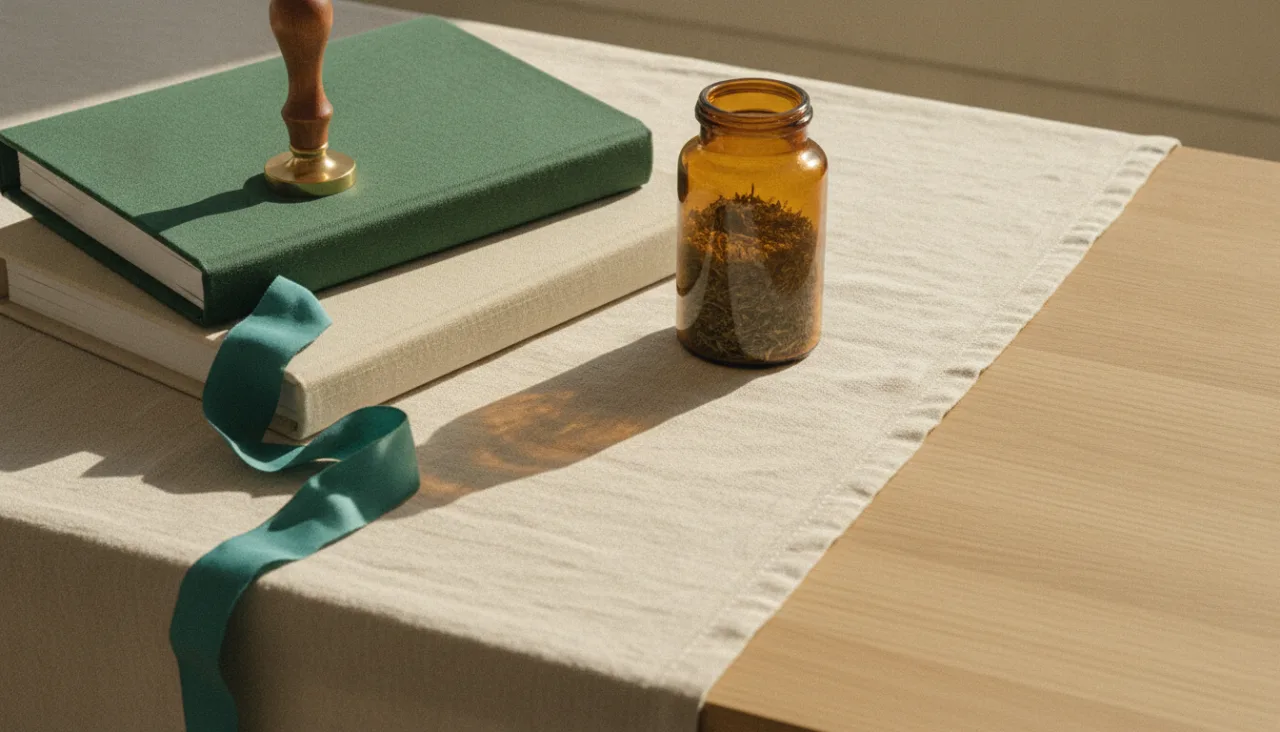
PCAB accreditation vs USP 795/797 compliance: what each covers
PCAB accreditation and USP 795/797 compliance often get treated as one idea, but they answer two different questions. One sets the rules for compounding. The other independently checks that a pharmacy follows them. Both matter when you are judging where an injectable is made.
What is the difference between PCAB and USP 797
The difference is simple: USP 797 is the rulebook, and PCAB is the audit. USP (in plain English: the United States Pharmacopeia) writes the standards. PCAB (the Pharmacy Compounding Accreditation Board) sends inspectors to confirm a pharmacy meets them.
Think of it like a building code versus a home inspection. The code defines what "safe" means; the inspection verifies your specific house was built to it. USP General Chapter <797>, revised effective November 1, 2023, is the sterile-compounding code, and it sorts each compounded sterile preparation into Category 1 or Category 2 by its beyond-use date.
What does PCAB accreditation cover
PCAB accreditation covers a pharmacy's policies, staff training, equipment, documentation, and quality systems, all checked during an on-site inspection. A pharmacy earns it only after passing that review, and must be re-inspected to keep it.
PCAB — now part of the Accreditation Commission for Health Care — has accredited compounding pharmacies since 2004. Because it is voluntary and independent, accreditation signals that a pharmacy chose outside scrutiny of what happens inside its walls. The value is the third party: an accreditor has no stake in the pharmacy passing, so its sign-off carries more weight than a pharmacy grading its own work. Accreditation complements, rather than replaces, the certificate of analysis that reports the testing on a specific finished product.
What do USP 795 and 797 require
USP 795 governs non-sterile compounding, and USP 797 governs sterile compounding — the category that includes injectable peptides. USP 797 spells out cleanroom design, environmental testing, personnel competency, and beyond-use dating.
These standards are enforceable through most state boards of pharmacy, which is why they function as mandatory even though USP is not a government body. So the practical takeaway is layered: USP writes the technical bar, state boards make it binding, PCAB independently verifies it, and the FDA sets the broader legal frame for 503A compounding pharmacies. Day-to-day, state boards and the FDA split oversight. When you evaluate where an injectable is made, a pharmacy that meets USP 797 and holds PCAB accreditation has cleared both the rule and an outside audit of it.
This article is educational and is not medical advice. Compounded medications are not FDA-approved. Clinical outcomes depend on individual factors and require physician evaluation. Results vary. Halftime Health is launching soon — join the waitlist to get updates.
Frequently asked questions
What is the difference between PCAB and USP 797?
USP 797 is a written standard for how sterile compounding must be done. PCAB is a voluntary accreditation program that sends inspectors to verify a pharmacy actually meets standards like USP 797 in practice. One is the rulebook; the other is an independent audit against it.
What does PCAB accreditation cover?
PCAB accreditation reviews a compounding pharmacy's policies, staff training, equipment, documentation, and quality systems against national standards. A pharmacy earns it only after an on-site inspection, and must be re-inspected periodically to keep it.
What do USP 795 and 797 require?
USP 795 sets standards for non-sterile compounding, such as capsules and creams. USP 797 sets standards for sterile compounding, such as injectables, including cleanroom design, testing, and beyond-use dating. Injectable peptides fall under USP 797.
Is USP 797 mandatory?
USP 797 is enforceable through most state boards of pharmacy and by accreditors, so in practice it functions as mandatory for sterile compounding even though USP itself is not a government agency.
Should a pharmacy have both?
The strongest pharmacies follow USP 795 and 797 as the baseline and also hold PCAB accreditation as independent proof. USP compliance is the standard; PCAB is the outside verification that the standard is being met.
Keep reading
A licensed physician can build a protocol from your own labs.
Membership from $69/mo, including your onboarding panel. Each protocol is its own monthly subscription.