
What PDE5 inhibitors are and how they work
PDE5 inhibitors are among the most prescribed medications in men's health. But most people who take sildenafil or tadalafil cannot explain how they work — which matters when evaluating whether they are appropriate, what to expect, and how they fit alongside other options.
What are PDE5 inhibitors
PDE5 inhibitors are a class of medications that block a specific enzyme called phosphodiesterase type 5 (PDE5 — in plain English: an enzyme that breaks down a chemical messenger in smooth muscle cells). The three most commonly prescribed are sildenafil (brand name: Viagra), tadalafil (brand name: Cialis), and vardenafil (brand name: Levitra).
A 2007 review in the International Journal of Impotence Research covering over 10,000 patients confirmed PDE5 inhibitors produce clinically significant improvement in erectile function in the majority of men with erectile dysfunction regardless of underlying cause. They are considered first-line treatment by most clinical guidelines.
How do PDE5 inhibitors work
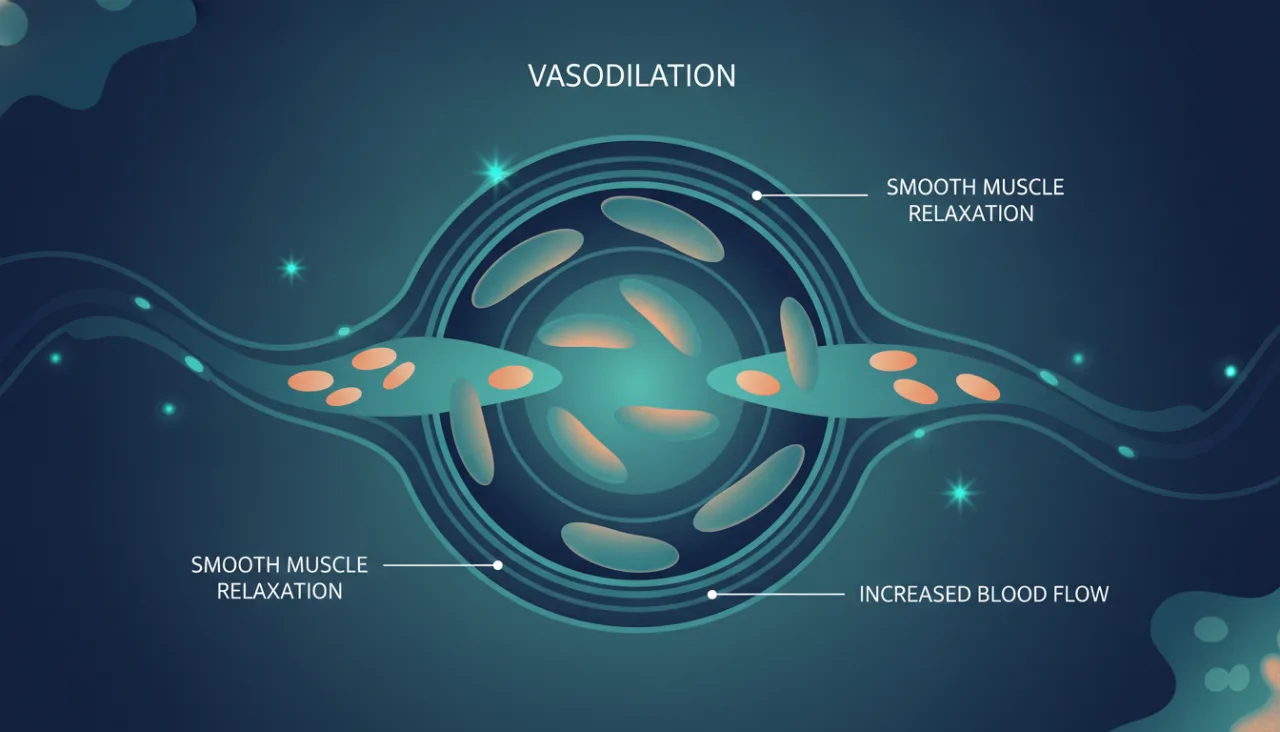
The mechanism is specific to the vascular physiology of sexual arousal. During arousal, nerve signals and mechanical stimulation trigger the release of nitric oxide (NO) in the smooth muscle tissue of the penis. Nitric oxide activates an enzyme that produces cGMP (cyclic guanosine monophosphate — in plain English: a chemical messenger that relaxes smooth muscle and allows blood vessel walls to widen). When blood vessels relax and widen, blood flows in and erectile tissue fills.
PDE5 is the enzyme that normally breaks cGMP down — ending the vasodilatory signal. PDE5 inhibitors block this breakdown, allowing cGMP levels to stay elevated longer and supporting the sustained vascular response needed for erection.
A key point from StatPearls (National Library of Medicine): PDE5 inhibitors do not produce erections without arousal. They potentiate the natural physiological response — they require the arousal signal to be present in the first place.
What is the difference between sildenafil and tadalafil
Both work through the same PDE5 inhibition mechanism. The clinical difference is duration. Sildenafil has an active window of 4–6 hours and is typically taken 30–60 minutes before activity. Tadalafil extends to 36 hours — long enough that patients often describe it as more spontaneous. Tadalafil is also available at a low daily dose (2.5–5mg) for continuous coverage.
Food significantly affects sildenafil absorption — a high-fat meal can delay onset. Tadalafil has minimal food interaction. Both are available as generics at a fraction of branded prices. For men whose low libido or sexual function challenges involve hormonal factors — including testosterone's role in sexual function — a men's midlife panel provides useful context alongside PDE5 therapy.
This article is educational and is not medical advice. Results vary based on individual factors and require physician evaluation. Halftime Health is launching soon — join the waitlist to get updates.
Frequently asked questions
What are PDE5 inhibitors?
PDE5 inhibitors are a class of medications that block the enzyme phosphodiesterase type 5, which breaks down cGMP in smooth muscle tissue. By blocking this enzyme, they allow cGMP to accumulate, relaxing smooth muscle and increasing blood flow. Sildenafil (Viagra), tadalafil (Cialis), and vardenafil are the most widely prescribed.
How do PDE5 inhibitors work?
Sexual arousal triggers nitric oxide release, which increases cGMP in penile smooth muscle, causing blood vessels to relax and fill. PDE5 normally breaks cGMP down. PDE5 inhibitors block that breakdown, sustaining the vasodilatory response. They do not cause erections without arousal — they enhance the natural physiological response.
What is the difference between sildenafil and tadalafil?
Sildenafil (Viagra) works for 4–6 hours and is taken as-needed. Tadalafil (Cialis) has a 36-hour window and is also available at low daily doses. Onset, duration, and food interactions differ. Both work through the same mechanism. Prescribing choice depends on lifestyle fit.
Are PDE5 inhibitors safe?
PDE5 inhibitors are well-studied with a strong safety record in appropriately screened patients. The primary contraindication is concurrent use of nitrate medications — the combination can cause a dangerous blood pressure drop. Patients on nitrates should not use PDE5 inhibitors.
Do PDE5 inhibitors require a prescription?
Yes. All PDE5 inhibitors require a physician prescription. Generic versions of sildenafil and tadalafil are available at significantly lower cost than branded versions.
Keep reading



A licensed physician can build a protocol from your own labs.
Membership from $69/mo, including your onboarding panel. Each protocol is its own monthly subscription.