
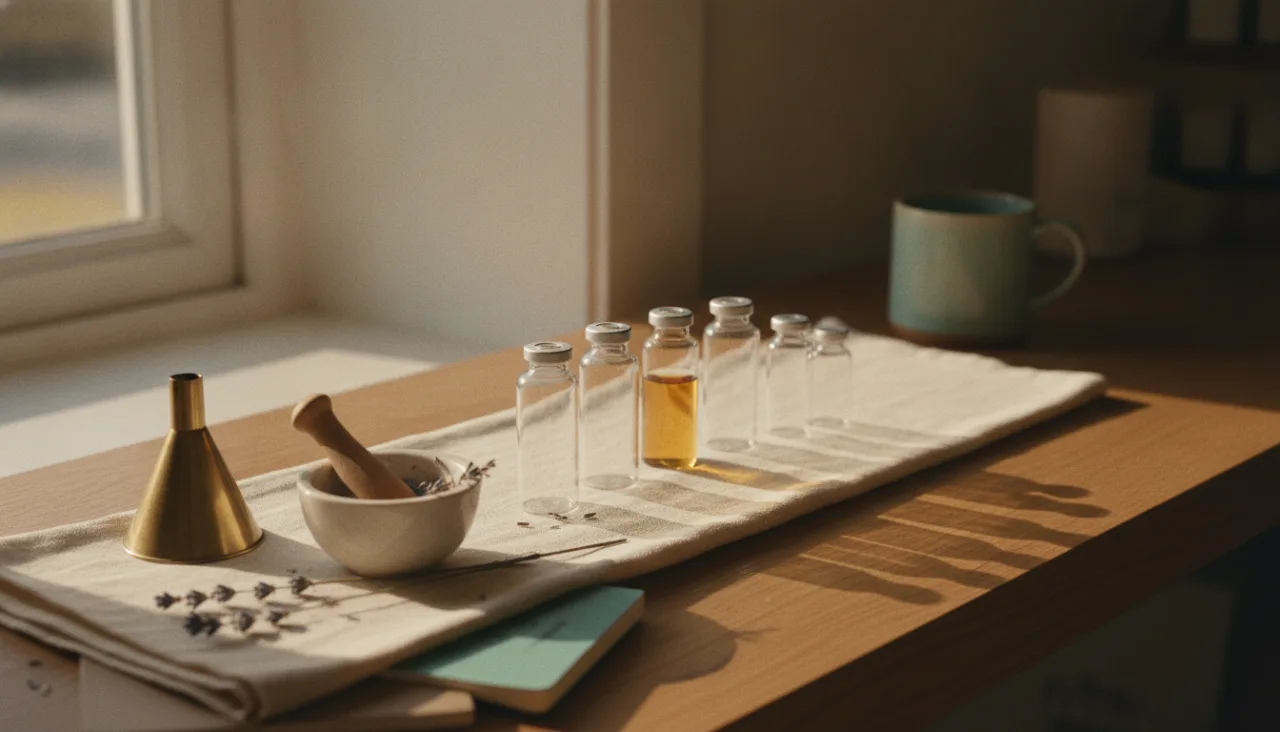
Peptide denaturation: what makes a peptide lose its shape
A peptide needs its 3D shape to do its job. Denaturation is what happens when that shape falls apart — and why it matters for how you store and handle peptide therapies.
TL;DR
- Denaturation means a peptide loses the folded shape it needs to work.
- Heat, extreme pH, and rough agitation are the main causes.
- It is often irreversible — which is why peptides are kept cold and handled gently.
What peptide denaturation is
Peptide denaturation (in plain English: a peptide losing its folded 3D shape) is the unfolding of a peptide's active structure. The peptide chain itself stays intact. The sequence of amino acids — called the primary structure — does not break. What breaks are the weaker bonds holding the chain in its working shape.
How denaturation works
Think of a peptide like a paper clip bent into a specific shape. The wire (the amino acid chain, or peptide bond backbone) stays whole. But if you press too hard or apply heat, the bends shift. The clip no longer fits the lock it was made for.
That is denaturation. Hydrogen bonds (in plain English: weak electrical attractions between atoms) and similar forces hold the fold. When heat, a very high or low pH (acidity level), or mechanical stress breaks those attractions, the fold collapses.
Who asks about denaturation
People starting peptide therapy often wonder why their vials need refrigeration. Others ask after accidentally leaving a vial at room temperature or mixing powder too vigorously. These are fair questions — storage errors are one of the most common ways peptide quality is compromised at home.
What the research says
Temperature is a primary driver of peptide and protein unfolding. A 2017 analysis published in PMC (PMC5706114) found that irreversible thermal denaturation follows measurable, predictable patterns. Knowing the temperature threshold for a given peptide helps set storage and handling guidelines.
A 2022 study (PMC9610776) examined how extreme conditions — including pH extremes — alter protein conformation (in plain English: 3D shape). Researchers reported that both high and low pH can unfold proteins in ways that mirror heat-induced damage.
What to know
Denaturation does not always mean a peptide is visibly ruined. You may not see cloudiness or color change. That is why prevention matters more than detection. Keep peptides refrigerated. Reconstitute (in plain English: mix back into solution) gently with slow swirling — not shaking. Avoid prolonged exposure to light or warmth.
The Halftime POV
We think the best peptide education starts with the basics. If a peptide loses its shape, it loses its function. Cold chain, gentle handling, and proper mixing are not optional. They are the foundation of a therapy that works. We build those standards into everything we do.
Related reading:
- Disulfide bonds and peptide stability
- Salt bridges and electrostatic interactions in peptides
- Peptide secondary structure: helices and sheets
- Peptide isoelectric point and solubility
- Peptide bioavailability: why injectable matters
FAQ
What is denaturation? Denaturation is the unfolding of a peptide or protein from its active 3D shape. Heat, extreme pH, or rough agitation can all trigger it by breaking the weak bonds that hold the fold together.
What causes a peptide to denature? The main causes are heat, very high or very low pH, and mechanical stress like vigorous shaking. These forces break hydrogen bonds and other weak interactions that maintain the peptide's shape.
Is denaturation reversible? Sometimes, but often not. Mild denaturation can reverse when conditions return to normal. Severe denaturation — like cooking an egg — is permanent. For compounded peptides, assume it is not reversible, which is why proper storage is critical.
Disclaimer
This article is educational and is not medical advice. Compounded medications are not FDA-approved. Clinical outcomes depend on individual factors and require physician evaluation. Results vary. Halftime Health is launching soon — join the waitlist to get updates.
Get updates
Halftime Health is launching soon. We'll share what we learn along the way — the research, the regulations, the real-world trade-offs. Join the waitlist and we'll email you when we're live.
Sources
Frequently asked questions
What is denaturation?
Denaturation is the unfolding of a peptide or protein from its active 3D shape. Heat, extreme pH, or rough agitation can all trigger it by breaking the weak bonds that hold the fold together.
What causes a peptide to denature?
The main causes are heat, very high or very low pH, and mechanical stress like vigorous shaking. These forces break hydrogen bonds and other weak interactions that maintain the peptide's shape.
Is denaturation reversible?
Sometimes, but often not. Mild denaturation can reverse when conditions return to normal. Severe denaturation — like cooking an egg — is permanent. For compounded peptides, assume it is not reversible, which is why proper storage is critical.
Keep reading


A licensed physician can build a protocol from your own labs.
Membership from $69/mo, including your onboarding panel. Each protocol is its own monthly subscription.