
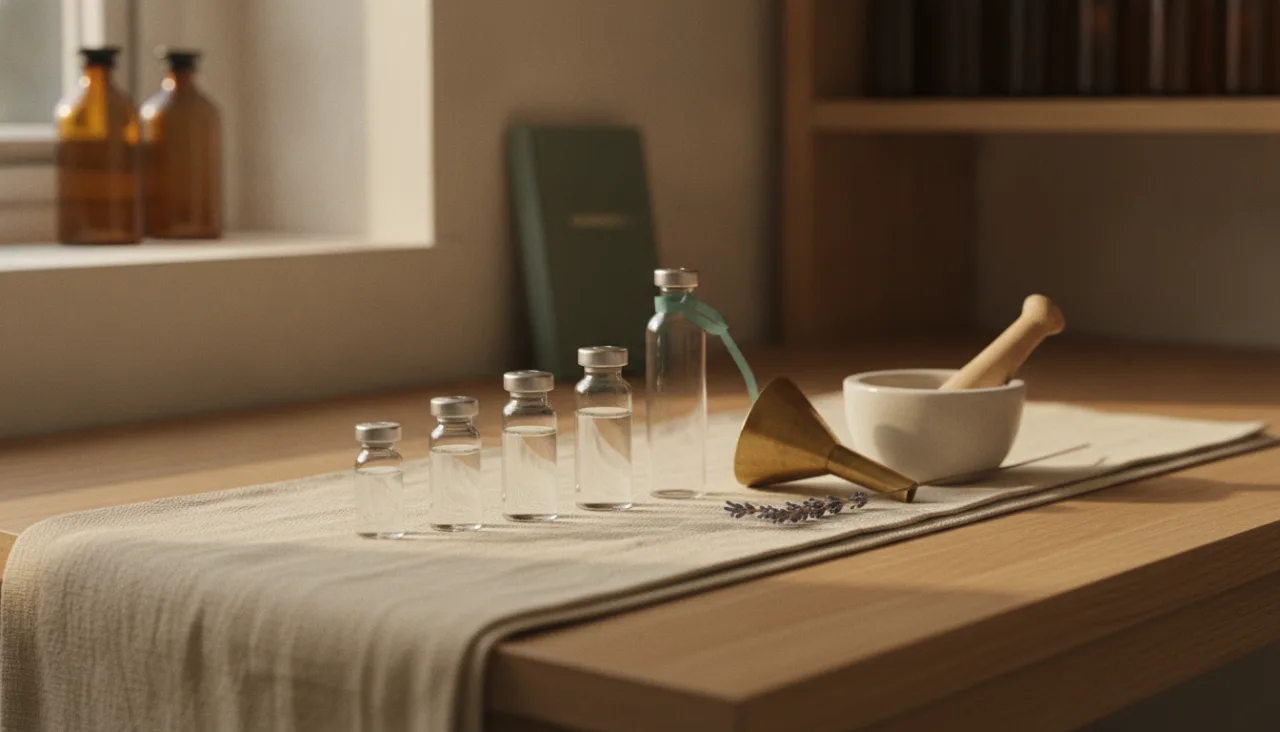
What is bacteriostatic water, and why peptides are mixed with it
The small vial of liquid next to your peptide is doing a quiet, important job.
TL;DR
- Bacteriostatic water is sterile water with a tiny bit of benzyl alcohol added as a preservative.
- That preservative keeps bacteria from growing, so a vial can be used over several days.
- Which water to use depends on the peptide and the pharmacy's instructions — not guesswork.
What it is
Bacteriostatic water is sterile water with a small amount of benzyl alcohol (in plain English: a common preservative that keeps germs from multiplying) mixed in. That one ingredient is the whole point. Plain sterile water has no preservative, so once you open it and draw from it, any stray bacteria could grow. Bacteriostatic water holds bacteria in check, which makes it suited to a multi-dose vial you will enter more than once over a few days. Many peptides come as a dry powder and need a liquid added before use, and bacteriostatic water is a frequent choice for that step (DailyMed, bacteriostatic water for injection).
How it works
Think of the preservative like the chlorine in a swimming pool. It does not sterilize the water perfectly, but it keeps bacteria from taking over between uses. "Bacteriostatic" literally means "holds bacteria still" (in plain English: it stops them from multiplying rather than killing every one). When you mix a peptide powder with this water, you get a usable solution that can sit in the fridge and be drawn from over several days without the bacteria problem you would risk with plain water. The peptide itself does not interact with the preservative in a meaningful way; the benzyl alcohol is just guarding the vial (NCBI Bookshelf, protein structure).
Who asks about it
People reach this topic when they notice two vials in their kit, one powder and one liquid, and wonder what the liquid actually is. Others see "bacteriostatic water" on an instruction sheet and want to know how it differs from the sterile water they have seen in a hospital. A common worry is whether they can swap one for the other. The question underneath is practical and worth answering carefully, because the right liquid, in the right amount, is part of using a peptide correctly.
What the research says
The role of preservatives like benzyl alcohol in multi-dose injectable products is well established in pharmacy practice; the preservative is what allows a vial to be safely entered more than once (DailyMed, bacteriostatic water for injection). The choice between bacteriostatic and plain sterile water is not arbitrary. It depends on the product, the volume, and who is using it. Notably, benzyl alcohol is not appropriate for certain groups, including newborns, which is one reason the choice belongs with a clinician and pharmacy rather than a default assumption (DailyMed).
What to know before considering it
The type and amount of water are part of the prescription, not a detail to improvise. Using the wrong diluent or the wrong volume can change the dose you draw or compromise the vial. Bacteriostatic water also has limits: once opened, it has its own shelf life, and the preservative is not right for everyone. None of this should be sorted out from a forum post. Any peptide therapy, including how it is mixed, should come through a licensed clinician and a quality pharmacy with written instructions you can follow exactly.
The Halftime POV
We cover bacteriostatic water because it is the kind of small detail that quietly separates careful peptide use from careless use. The liquid is not an afterthought; it protects the vial and helps you draw the right dose. Proactive medicine for your second half means understanding even the unglamorous parts of how a therapy works. Know what is in that second vial, follow the instructions to the letter, and ask your clinician when something is unclear. The basics, done right, are most of the game.
Related reading:
- What are peptides? A plain-English primer
- Reconstitution math: mg, IU, and units explained
- How to reconstitute a peptide, step by step
FAQ
Q: What is bacteriostatic water? A: Bacteriostatic water is sterile water with a small amount of benzyl alcohol added as a preservative. The preservative keeps bacteria from multiplying in the vial after it is opened, so a multi-dose vial can be used over several days rather than thrown out after one use.
Q: How is bacteriostatic water different from sterile water? A: Both start as sterile water. The difference is the preservative. Plain sterile water has none, so it is meant for single use. Bacteriostatic water contains benzyl alcohol, which holds bacteria in check, making it suited to vials entered more than once.
Q: Which water should be used to mix a peptide? A: It depends on the peptide, the dose, and the pharmacy's instructions. Some products specify bacteriostatic water; others call for sterile water. Benzyl alcohol is also not appropriate for certain people, such as newborns. Always follow the clinician's and pharmacy's directions rather than guessing.
Disclaimer
This article is educational and is not medical advice. Compounded medications are not FDA-approved. Clinical outcomes depend on individual factors and require physician evaluation. Results vary. Halftime Health is launching soon — join the waitlist to get updates.
Get updates
Halftime Health is launching soon. We'll share what we learn along the way — the research, the regulations, the real-world trade-offs. Join the waitlist and we'll email you when we're live.
Sources
Frequently asked questions
What is bacteriostatic water?
Bacteriostatic water is sterile water with a small amount of benzyl alcohol added as a preservative. The preservative keeps bacteria from multiplying in the vial after it is opened. That lets a multi-dose vial be used safely over several days rather than thrown out after one use.
How is bacteriostatic water different from sterile water?
Both start as sterile water. The difference is the preservative. Plain sterile water has none, so it is meant for single use. Bacteriostatic water contains benzyl alcohol, which holds bacteria in check, making it suited to vials that will be entered more than once.
Which water should be used to mix a peptide?
That depends on the specific peptide, the dose, and the pharmacy's instructions. Some products specify bacteriostatic water; others call for sterile water. Benzyl alcohol is also not appropriate for certain people, such as newborns. Always follow the clinician's and pharmacy's directions rather than guessing.
Keep reading
A licensed physician can build a protocol from your own labs.
Membership from $69/mo, including your onboarding panel. Each protocol is its own monthly subscription.