

Why peptides come as a freeze-dried powder: lyophilization explained
If you have ever wondered why your peptide arrives dry, the answer is the same trick that makes instant coffee.
TL;DR
- Peptides usually arrive as a dry powder because water makes them break down faster.
- The drying method is called lyophilization, better known as freeze-drying.
- You add sterile liquid back, called reconstitution, right before the peptide is used.
What it is
Lyophilization (in plain English: freeze-drying) is a way to take the water out of a product and leave behind a dry, stable powder. You have eaten the results of it before. Freeze-dried coffee, backpacking meals, and the strawberries in cereal are all made this way. Pharmacies use the same basic idea, just to far stricter standards. For peptides, freeze-drying turns a fragile, water-sensitive molecule into a shelf-stable powder that can survive shipping and storage. The water is added back later, a step called reconstitution, right before the peptide is used (FDA, lyophilization of parenterals).
How it works
Think of it like preserving fresh berries. Leave them in water and they spoil in days. Freeze and gently dry them, and they last for months. Freeze-drying works in three steps. First, the peptide solution is frozen solid. Second, under very low pressure, the ice turns straight into vapor and is pulled away, skipping the liquid stage entirely. Third, a final gentle dry removes the last traces of moisture. What is left is a dry cake or powder of peptide. Because the molecule is no longer sitting in water, the chemical reactions that would slowly degrade it nearly grind to a halt (NCBI Bookshelf, protein structure).
Who asks about it
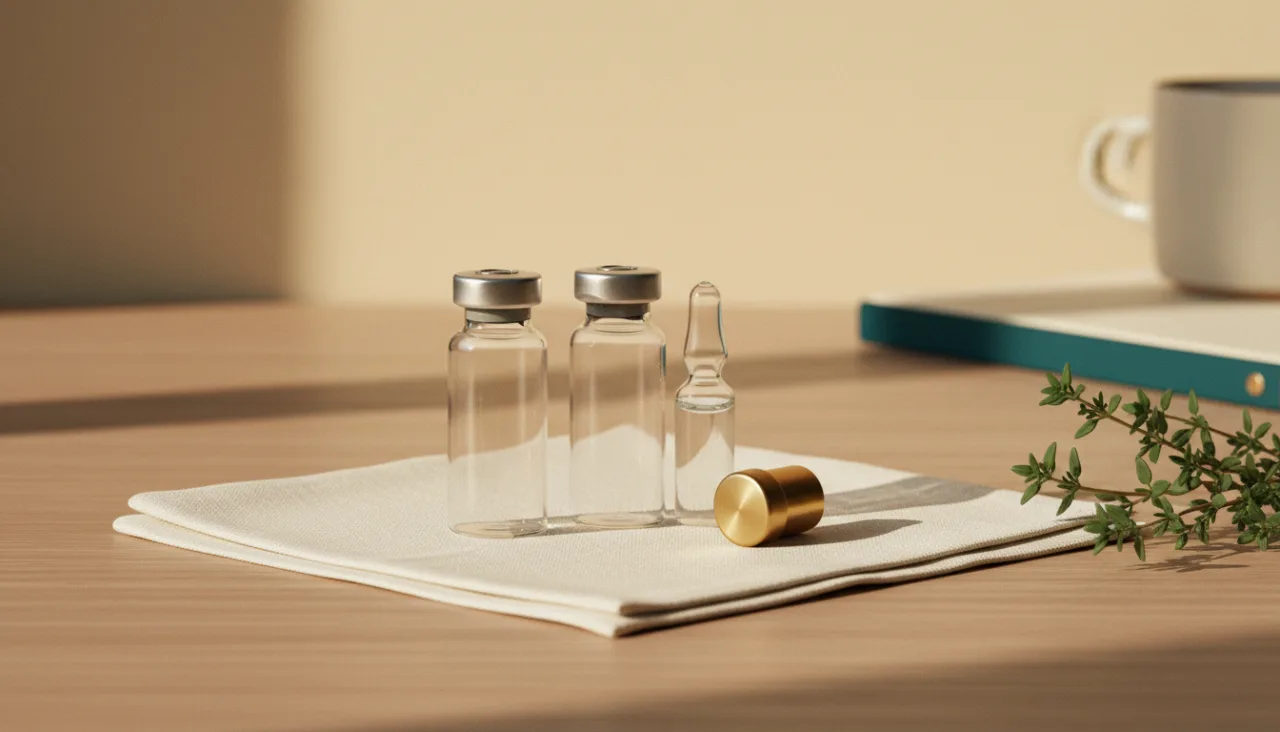
People reach this topic when a peptide shows up as a small amount of white powder in a vial and they expected a ready-to-use liquid. They wonder if something is wrong, or whether the powder is "less than" a pre-mixed product. Others are simply curious why a clinic hands them a separate vial of liquid to mix in. The question underneath is reassuring to answer: the powder form is not a shortcut or a downgrade. It is the format that keeps a fragile molecule intact until the moment it is needed.
What the research says
Decades of pharmaceutical practice show that water is the enemy of many fragile molecules, including peptides and proteins (NCBI Bookshelf, protein structure). In a water solution, slow chemical reactions can clip, fold, or clump the molecule over time. Removing the water dramatically slows those reactions, which is why freeze-drying is a standard way to extend the shelf life of injectable medicines (FDA, lyophilization of parenterals). The trade-off is that drying must be done carefully. Done poorly, it can stress the molecule; done well, it preserves the structure so the peptide returns to form when liquid is added back.
What to know before considering it
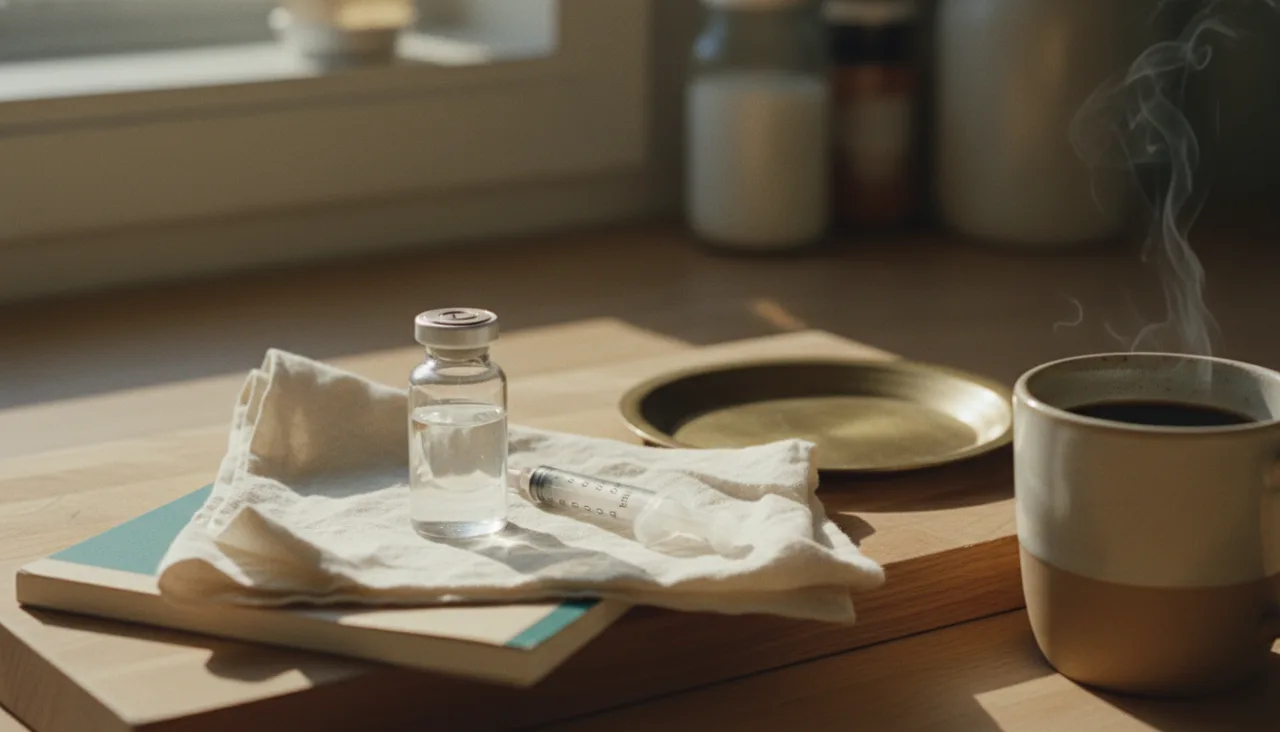
The powder format means the mixing step matters. How a peptide is reconstituted, stored, and handled affects whether it stays intact, and those steps should follow the pharmacy's and clinician's instructions, not a video online. Once liquid is added, the clock starts again, so reconstituted peptides usually need refrigeration and have a limited window of use. None of this is something to improvise. Any peptide therapy should come through a licensed clinician and a quality pharmacy, with clear directions for storage and timing. The freeze-dried form buys stability; correct handling is what protects it.
The Halftime POV
We explain lyophilization because it quietly answers a question almost everyone has and few ask: why the powder? Knowing the reason turns an unfamiliar vial into something that makes sense. A fragile molecule is kept in suspended animation until you need it, then woken up with sterile liquid. Proactive medicine for your second half is built on exactly this kind of clarity. Understand the format, respect the handling, and ask your clinician the storage questions that keep the medicine doing its job.
Related reading:
- What are peptides? A plain-English primer
- Peptide half-life: why timing matters
- Beyond-use dating: how long a compounded medication stays good
FAQ
Q: What is lyophilization? A: Lyophilization is freeze-drying. It removes water by freezing a product and then pulling the ice off as vapor, leaving a dry, stable powder. It is the same basic idea behind freeze-dried coffee or backpacking meals, just done to pharmaceutical standards.
Q: Why are peptides freeze-dried instead of sold as a liquid? A: Peptides are fragile and tend to break down in water over time. Removing the water puts the peptide into a kind of suspended animation, so it stays stable far longer during shipping and storage. The water is added back, called reconstitution, right before use.
Q: Does freeze-drying change the peptide? A: Done correctly, freeze-drying is designed to preserve the peptide's structure, not alter it. The goal is to take the water away gently so the molecule keeps its shape. When liquid is added back properly, the peptide returns to its working form.
Disclaimer
This article is educational and is not medical advice. Compounded medications are not FDA-approved. Clinical outcomes depend on individual factors and require physician evaluation. Results vary. Halftime Health is launching soon — join the waitlist to get updates.
Get updates
Halftime Health is launching soon. We'll share what we learn along the way — the research, the regulations, the real-world trade-offs. Join the waitlist and we'll email you when we're live.
Sources
Frequently asked questions
What is lyophilization?
Lyophilization (in plain English: freeze-drying) is a way to remove water from a product by freezing it and then pulling the ice off as vapor. The result is a dry, stable powder. It is the same basic idea behind freeze-dried coffee or backpacking meals, just done to pharmaceutical standards.
Why are peptides freeze-dried instead of sold as a liquid?
Peptides are fragile and tend to break down in water over time. Removing the water puts the peptide into a kind of suspended animation, so it stays stable far longer during shipping and storage. The water is added back, called reconstitution, right before use.
Does freeze-drying change the peptide?
Done correctly, freeze-drying is designed to preserve the peptide's structure, not alter it. The goal is to take the water away gently so the molecule keeps its shape. When water is added back properly, the peptide returns to its working form.
Keep reading
A licensed physician can build a protocol from your own labs.
Membership from $69/mo, including your onboarding panel. Each protocol is its own monthly subscription.