
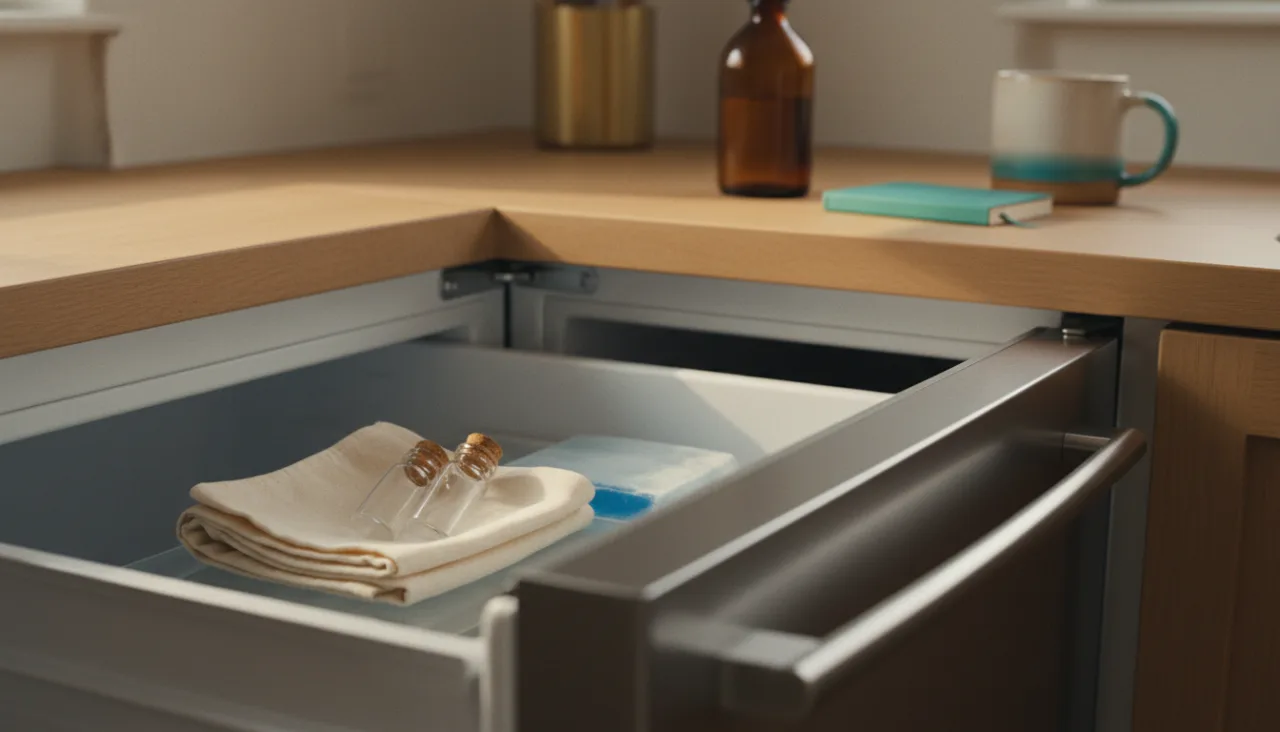
Peptide storage and cold chain basics
Temperature is a common way peptides are compromised outside the clinic. Correct storage is straightforward once you know the ranges.
TL;DR
- Unopened lyophilized (freeze-dried) vials are typically stored at 2–8°C (standard refrigerator range).
- Reconstituted vials must be kept refrigerated and, when prepared with bacteriostatic water, are generally used within 28 days.
- Extended time above 25°C or exposure to direct light can degrade the compound before the expiration date.
What it is
Peptide stability refers to the compound's ability to maintain its intended molecular structure — and therefore its activity — over time. Stability is affected by temperature, light, humidity, pH, and physical agitation. Compounding pharmacies follow USP Chapter <797> standards for sterile preparations, which specify storage conditions and beyond-use dating (USP <797>, 2023). These standards exist because an out-of-specification vial may appear identical to an in-specification one but deliver a fraction of the intended compound.
How it works
Lyophilization removes water, which is the primary driver of hydrolytic degradation — the chemical reaction that breaks peptide bonds. A freeze-dried vial stored at 2–8°C and protected from light has the longest practical shelf life. Once you add BAC water, you've reintroduced the aqueous environment, and the clock starts. Refrigeration slows — but doesn't stop — the degradation that occurs in solution. The 28-day figure often quoted for reconstituted vials is an upper limit in USP <797> for using a multiple-dose vial after it is first punctured, not a peptide-specific calculation.
Who asks about it
People often come to this question after receiving a shipment and wanting to confirm they're storing it correctly. They also ask after a power outage, a warm car, or any other temperature excursion they're concerned about.
What the research says
USP <797> sets beyond-use dates for compounded sterile preparations based on how they are made, tested and stored. Once a multiple-dose vial is first punctured, it must not be used for longer than its assigned beyond-use date or 28 days, whichever is shorter, and the 28-day limit must be supported by antimicrobial effectiveness testing on the preparation (USP <797> commentary, 2022). Some peptides are also sensitive to ultraviolet light, which can drive oxidation of amino acid residues, particularly those containing cysteine or methionine.
What to know before considering it
If you're ever uncertain whether a vial has been compromised — by temperature excursion, freeze-thaw cycling, or unexpected appearance changes — do not inject it. Contact the prescribing physician or dispensing pharmacy for guidance. The cost of replacing a vial is low relative to the risk of injecting a degraded preparation.
The Halftime POV
Good storage practice is easy to build into a routine. Keep the vials in the door of a dedicated shelf in the refrigerator — not the freezer compartment — and set a dated label on reconstituted vials so you know exactly when the 28-day window ends. Five minutes of organization prevents the most common storage mistakes.
Related reading:
FAQ
Q: How should lyophilized (freeze-dried) peptides be stored before reconstitution? A: Lyophilized peptide vials should be refrigerated at 2–8°C (36–46°F) and kept away from light. They should not be frozen. Most compounded lyophilized peptides remain stable for several months under proper refrigeration — check the pharmacy's expiration label, which reflects their stability testing data.
Q: How should reconstituted peptide vials be stored? A: Once reconstituted with bacteriostatic water, peptide solutions should be refrigerated at 2–8°C and used within the timeframe specified by the compounding pharmacy, which USP standards cap at 28 days after the vial is first punctured. Do not freeze reconstituted vials. Keep them upright and away from light.
Q: What happens if peptides are exposed to heat or freeze-thaw cycles? A: Peptides are sensitive to temperature extremes and repeated freeze-thaw cycles. Heat causes peptide degradation — breaking the amino acid chains at vulnerable points. Freezing and thawing reconstituted solutions can cause protein aggregation. Degraded peptides may have reduced activity or produce unexpected breakdown products.
Disclaimer
This article is educational and is not medical advice. Compounded medications are not FDA-approved. Clinical outcomes depend on individual factors and require physician evaluation. Results vary.
Get started
We share what we learn along the way — the research, the regulations, the real-world trade-offs. Get started with Halftime Health.
Sources
- USP General Chapter <797> Pharmaceutical Compounding — Sterile Preparations — US Pharmacopeia, 2023
- Commentary for <797>, USP–NF 2023, Issue 1 — US Pharmacopeia, 2022
- FDA Guidance: Current Good Manufacturing Practice for Finished Pharmaceuticals — FDA.gov
Frequently asked questions
How should lyophilized (freeze-dried) peptides be stored before reconstitution?
Lyophilized peptide vials should be refrigerated at 2–8°C (36–46°F) and kept away from light. They should not be frozen. Most compounded lyophilized peptides remain stable for several months under proper refrigeration — check the pharmacy's expiration label, which reflects their stability testing data.
How should reconstituted peptide vials be stored?
Once reconstituted with bacteriostatic water, peptide solutions should be refrigerated at 2–8°C and used within the timeframe specified by the compounding pharmacy, which USP standards cap at 28 days after the vial is first punctured. Do not freeze reconstituted vials. Keep them upright and away from light.
What happens if peptides are exposed to heat or freeze-thaw cycles?
Peptides are sensitive to temperature extremes and repeated freeze-thaw cycles. Heat causes peptide degradation — breaking the amino acid chains at vulnerable points. Freezing and thawing reconstituted solutions can cause protein aggregation. Degraded peptides may have reduced activity or produce unexpected breakdown products.
Keep reading
A licensed physician can build a protocol from your own labs.
Membership from $39/mo, or $390 for the year, including your onboarding panel. Each protocol is its own monthly subscription.